
The ancient art and science of architecture, traditionally reliant on human intuition, craftsmanship, and iterative design, is undergoing a profound metamorphosis. At the heart of this transformation lies Artificial Intelligence (AI), a revolutionary force poised to reshape every facet of the built environment. AI is moving beyond computational tools to become an intelligent partner, augmenting human capabilities, optimizing processes, and fostering unprecedented levels of innovation, sustainability, and personalization in design and construction. The integration of AI is not merely an incremental change but a paradigm shift that promises to redefine how buildings are conceived, created, and interact with their inhabitants and the surrounding world.
The advent of AI in architecture is a response to the increasing complexity of modern building challenges, including the imperative for sustainable design, the demand for highly optimized and personalized spaces, and the need for greater efficiency in the notoriously fragmented construction industry. From generative design algorithms that explore millions of possibilities to predictive analytics that optimize building performance, AI is empowering architects to tackle problems once deemed intractable and to unlock creative solutions that were previously unimaginable. This technological evolution heralds a new era where buildings are not just static structures but dynamic, intelligent entities that learn, adapt, and respond to their environment and occupants.
The Dawn of AI in Architectural Practice
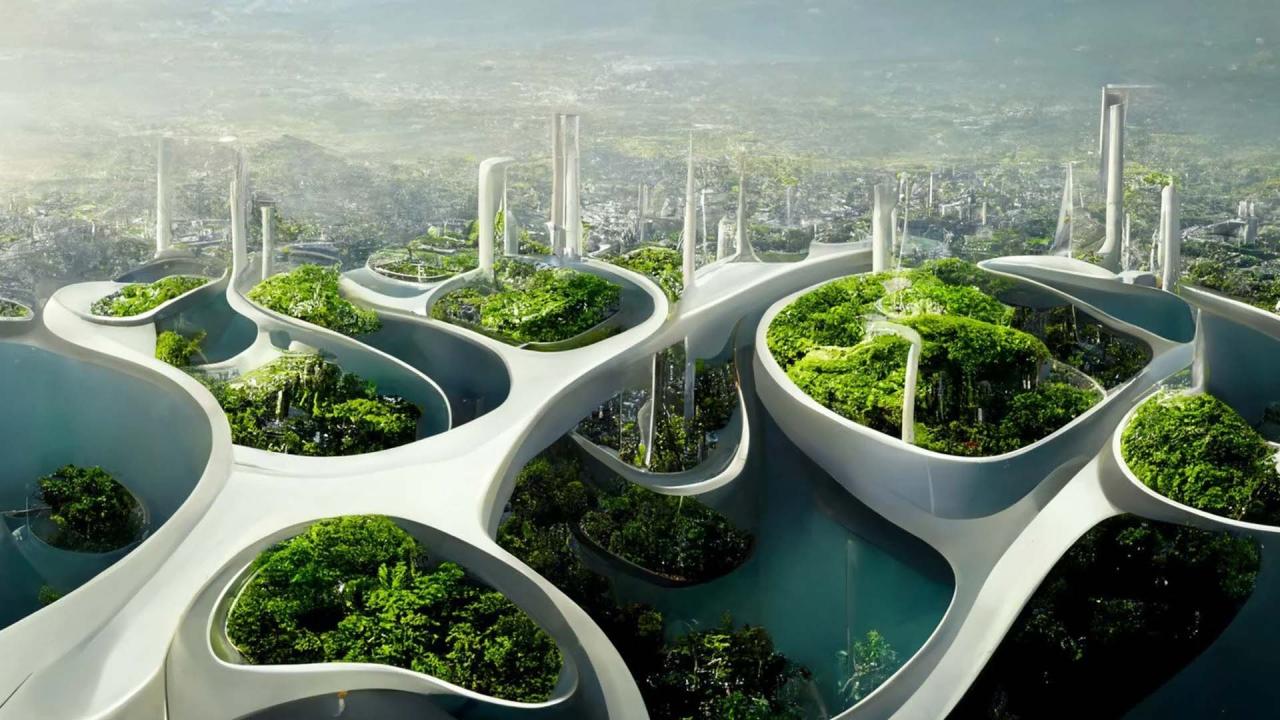
AI’s integration into architecture is rapidly expanding across various stages of the project lifecycle:
Conceptual Design and Ideation
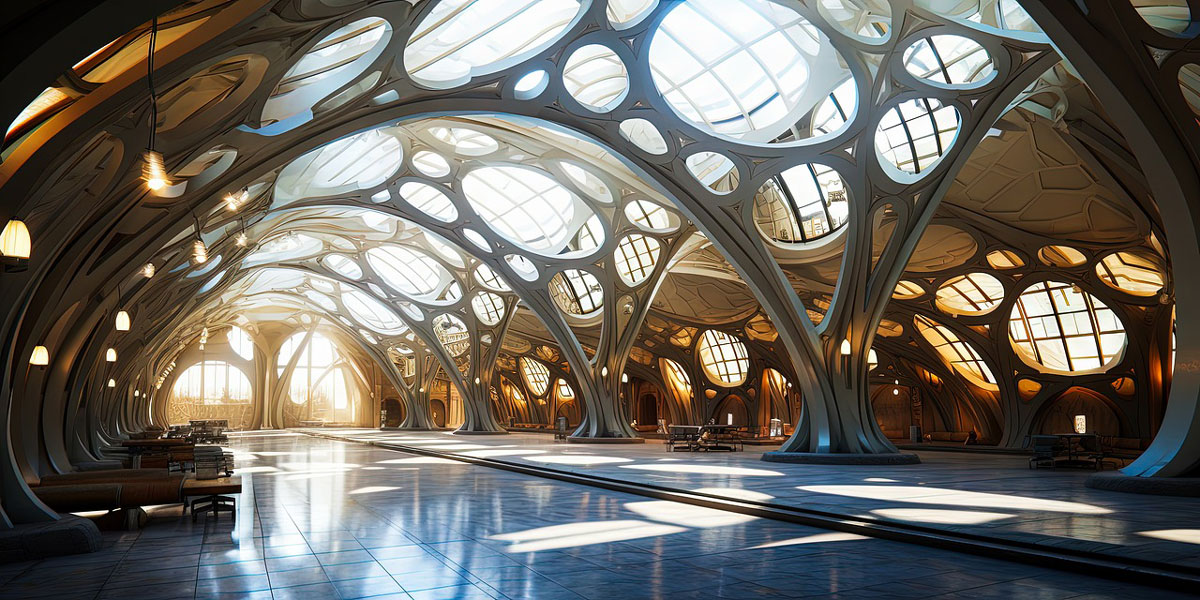
AI algorithms can generate a multitude of design options based on predefined parameters (e.g., site constraints, desired program, sustainability goals, aesthetic preferences). This allows architects to explore a wider solution space faster than traditional manual methods. For instance, an AI might generate thousands of massing studies for a skyscraper, each optimized for views, natural light, and structural efficiency, allowing architects to quickly iterate and refine. AI can help in discovering optimal forms for structures that are efficient in terms of material use, structural integrity, or aerodynamic performance, especially for complex geometries. AI can analyze vast datasets of architectural styles, historical precedents, or even natural forms to generate new concepts or suggest design motifs that align with a desired aesthetic, serving as a creative muse for architects.
Pre-Construction and Planning
AI can rapidly assess site conditions, regulatory requirements (zoning, building codes), and economic viability, providing quick insights into project feasibility. AI-powered tools can automate the generation of blueprints, schedules, and specifications, significantly reducing the manual labor involved in creating construction documents. This streamlines the documentation process, reducing errors and saving time. AI can analyze microclimates, solar paths, wind patterns, and other environmental factors to inform design decisions for optimal passive heating/cooling, daylighting, and ventilation. AI models can simulate how a building will interact with its environment, predicting energy performance or comfort levels.
Detailed Design and Optimization
AI algorithms can analyze and optimize building performance across multiple metrics, including energy consumption, structural integrity, thermal comfort, acoustic performance, and occupant flow. This leads to more efficient and sustainable designs. AI can recommend optimal materials based on cost, sustainability (e.g., recycled content, embodied carbon), structural properties, and aesthetic requirements. It can also optimize material cuts to minimize waste. AI can rapidly scan designs against complex building codes and regulations, identifying potential non-compliance issues before they become costly problems during construction. AI seamlessly integrates with parametric design tools, allowing for real-time adjustments and analysis of complex geometries and relationships within a design.
Construction and Project Management
AI can optimize construction schedules by identifying critical paths, predicting potential delays, and allocating resources efficiently, minimizing downtime and cost overruns. AI drives robotic construction processes, from bricklaying to complex assembly of prefabricated components, leading to faster, safer, and more precise construction. AI-powered computer vision systems can monitor construction sites in real-time, identifying deviations from design, detecting defects, and ensuring quality adherence, reducing rework. AI can predict material needs and optimize logistics, ensuring materials arrive on site exactly when needed, reducing waste and storage costs.
Post-Occupancy and Building Operation
AI powers intelligent building systems that learn occupant preferences, optimize HVAC and lighting settings for comfort and energy efficiency, and predict maintenance needs. I analyzes data from building sensors to predict equipment failures before they occur, enabling proactive maintenance and extending asset lifespan, reducing costly downtime. AI can analyze how occupants interact with a space, providing valuable insights for future designs, space utilization optimization, and personalized environmental control. Buildings can adapt their internal environments (e.g., lighting, temperature, layout) in real-time based on AI analysis of occupant presence, activities, and external conditions.
Enabling Technologies and Methodologies
The capabilities of AI in architecture are underpinned by several key technologies and methodologies:
- Machine Learning (ML): Training AI models on vast datasets of past architectural projects to learn relationships between design parameters and outcomes (e.g., energy performance, cost, aesthetics). Identifying patterns and clusters in design data without predefined labels, useful for discovering new design typologies or optimizing layouts. AI agents learn to make optimal design decisions through trial and error, receiving “rewards” for achieving desired outcomes (e.g., minimizing structural weight, maximizing daylight).
- Generative Adversarial Networks (GANs): GANs can generate new, realistic architectural designs or textures that mimic specific styles, pushing the boundaries of creative exploration. They consist of two neural networks, a generator and a discriminator, competing against each other to create increasingly realistic outputs.
- Computer Vision: Analyzing images and LiDAR data to understand complex site conditions, existing structures, and environmental features. Real-time visual inspection of construction progress, identifying potential safety hazards or deviations from the design. Detecting imperfections in materials or construction work.
- Natural Language Processing (NLP): AI can interpret and extract key requirements from textual design briefs, transforming them into actionable parameters for generative design tools. Processing and understanding complex building codes and regulations to ensure compliance. Enabling architects and occupants to interact with design software or smart building systems using natural language commands.
- Building Information Modeling (BIM): BIM provides the structured, interconnected data model that serves as the essential backbone for AI applications in architecture. AI can leverage BIM data for analysis, optimization, and automation. AI can assist in generating BIM models from sketches or less detailed inputs, populating them with intelligent objects and data.
- Computational Design and Parametricism: AI enhances computational design by allowing algorithms to learn from data and continuously refine design rules and parameters, moving beyond fixed scripts. AI can manage and optimize extremely complex and organic geometries that are difficult to handle with traditional methods.
Benefits of AI in Architecture

The widespread integration of AI promises a paradigm shift with numerous benefits for the architectural profession and the built environment:
- Enhanced Creativity and Innovation: AI can explore design possibilities that humans might overlook, leading to novel forms, efficient structures, and innovative material applications. Designers can rapidly generate and evaluate countless design iterations, freeing them to focus on high-level conceptualization and refinement. AI acts as an intelligent co-creator, pushing the boundaries of what’s possible and allowing architects to focus on the truly creative and strategic aspects of design.
- Improved Efficiency and Productivity: AI can automate tedious, time-consuming tasks like drafting, code checking, and quantity take-offs, allowing architects to allocate more time to creative problem-solving. Faster ideation, analysis, and documentation accelerate the entire design process. Efficiency gains in design, construction, and operation translate directly into reduced project costs.
- Optimized Performance and Sustainability: AI enables architects to make informed decisions based on real-time data and predictive analytics, leading to highly optimized and sustainable buildings. AI can design for passive strategies, optimize HVAC systems, and manage energy consumption in real-time, significantly reducing a building’s environmental footprint. AI can minimize material waste through efficient design and construction planning, contributing to a more circular economy.
- Greater Personalization and User Experience: Buildings can learn and adapt to the specific needs, preferences, and behaviors of their occupants, creating highly personalized and comfortable spaces. AI can anticipate occupant needs (e.g., adjusting temperature before a meeting starts) based on learned patterns and external factors. By optimizing environmental factors like light, air quality, and acoustics, AI contributes to healthier and more productive indoor environments.
- Reduced Risks and Errors: AI can identify design flaws, code violations, and potential construction conflicts much earlier in the process, minimizing costly mistakes and rework. Forecasting potential issues in construction or operation allows for proactive mitigation strategies. On construction sites, AI can monitor for safety hazards and ensure adherence to safety protocols.
Challenges and Ethical Considerations
Despite its transformative potential, the widespread adoption of AI in architecture faces several challenges and raises important ethical questions:
- Data Dependency and Quality: AI models are only as good as the data they are trained on. Poor quality, biased, or insufficient data can lead to flawed or suboptimal designs. The collection and analysis of vast amounts of building and occupant data raise concerns about privacy and cybersecurity.
- Initial Investment and Accessibility: Implementing AI tools and infrastructure can require significant investment, which may be a barrier for smaller firms or developing regions. Ensuring equitable access to these powerful tools and the necessary training will be crucial to prevent a widening gap between large and small practices.
- Maintaining Human Creativity and Intuition: There is a concern that AI might diminish the role of human architects, reducing creativity to mere parameter setting. AI learns from explicit data, but human architects rely heavily on tacit knowledge, experience, and nuanced understanding that is difficult to quantify. Ensuring this knowledge is not lost is vital. While AI can optimize, ethical decisions about human well-being, societal impact, and cultural context ultimately remain the domain of human architects.
- Legal and Regulatory Frameworks: Who is responsible when an AI-generated design leads to a structural failure or legal dispute? The question of liability for AI-driven designs is complex and largely unresolved. Ownership of designs generated or heavily influenced by AI algorithms presents new intellectual property challenges. Current building codes are not designed for AI-driven, highly optimized, or dynamically adaptive structures, requiring updates and flexibility.
- Complexity and Training: Architects and design professionals will need new skills in computational thinking, data science, and AI literacy to effectively utilize these tools. Successful AI integration requires closer collaboration between architects, computer scientists, engineers, and data specialists.
The Future of Architectural Practice with AI
The future of architecture with AI will likely be characterized by an increasingly symbiotic relationship between human and machine.
- The Augmented Architect: Architects will evolve from sole creators to orchestrators of AI tools, leveraging their intuition and strategic thinking to guide AI-driven processes. They will focus on defining problems, setting parameters, evaluating AI-generated solutions, and embedding human values into design.
- Intelligent Buildings as Living Organisms: Buildings will become more dynamic and responsive, learning from their environment and occupants, continuously optimizing for performance, comfort, and sustainability. They will be self-diagnosing and proactive in maintenance.
- Democratization of Design: While advanced AI tools might be expensive, the long-term trend could see AI simplifying complex design tasks, potentially making high-quality, customized design more accessible to a wider audience, including non-professionals for simple structures or renovations.
- New Business Models: AI will enable new architectural services, such as performance optimization consulting, predictive maintenance planning, and data-driven space utilization analysis.
- Hyper-Personalization: Homes and workspaces will be able to adapt to individual preferences in real-time, creating truly bespoke environments tailored to the occupant’s physiological and psychological needs.
- Sustainable Urban Ecosystems: AI will be crucial for designing and managing entire urban ecosystems, optimizing resource flows, energy grids, and transportation networks in real-time, creating truly smart and resilient cities.
Conclusion
The integration of Artificial Intelligence into architecture is not a threat to human creativity but an unparalleled opportunity to elevate the profession to new heights. By automating tedious tasks, optimizing complex systems, and exploring infinite design possibilities, AI empowers architects to focus on the human-centric aspects of design – aesthetics, emotional impact, cultural resonance, and community well-being.
The future built environment will be a testament to this powerful collaboration between human intuition and machine intelligence, resulting in spaces that are not only more beautiful, efficient, and sustainable but also profoundly intelligent, adaptive, and responsive. As AI continues to evolve, it will undoubtedly shape a future where every structure, from the smallest home to the grandest city, is a smart, living entity, designed to enhance human flourishing and forge a truly smarter, more sustainable world.